Showing posts with label budget. Show all posts

Saturday, May 23, 2015

Filmmakers Talk #12 - Creativity Ends


Post your funny comments that you may have come across and it just might make it to the Film-Makers Talk List


Some past Talks:


*This is a work of fiction. Names, characters, quotes, places and incidents mentioned, either are products of the author’s imagination or are used fictitiously. Any resemblance to actual events or locales or persons, living or dead, from the film industry or outside the film industry is entirely coincidental.


For more interesting articles click on Auggielicious Index to see the entire list.
Like / Follow on the Facebook page Auggielicious for information, latest news, job posts etc..


Monday, February 2, 2015

Production Time Sheet / Job Sheet Template - FREE

For any production company doing many projects at the same time, one of the main complications is getting a comprehensive report of time spent on different jobs by different people and therefore the money spent on that project. Also producers would like to do a quick comparison between projects to see which one has cost more than estimated. So while there may be a lot of paid apps that do this for you not always do you have the budget to buy these or you are not sure if that app is something that would suit your needs. At the place I currently work I was thrown this same challenge, so I worked out on Microsoft Excel a simple table that gives me all the information I need. (Get your FREE TEMPLATE of this, details below)

Image 1: The Master Table 

The Challenge

So there are multiple things that I had to consider when making this sheet, 
# There will be multiple projects being worked upon at the same time.
# Within each project there are different jobs to be done - Offline, Online, Grade etc
# The job / role of each person has to be considered, lots of times the same person performs different operations like sometimes as an Asst Editor and sometimes Editor
# The reason for knowing the different roles within the job would be because rates would cost different for different roles eg - transcoding rates would be different from a offline rate 

So the main challenge was how to compress all this information into one table so that I do not have to keep adjusting data to look at various combinations. One look at Image 1 & 2 tells you that I broke up the table with the jobs on one side and each person working under each project on the other side which includes sub categories. In the sub category each persons individual contribution gets mentioned. All the data on this sheet gets automatically updated when the details are filled in.


Image 2: Master table expanded

The Working

So the Master table I designed gives me all the combination of information I need, the drop down options lets me filter the information, so I can choose from which months or month I want to see information of, or I can choose to hide some projects. Under each project people who worked on it get automatically added when they clock in hours and the role that they played also gets updated as I fill up the information on the next sheet (Detailed Report - Image 3)


Here on this sheet information is broken up under the various categories shown in Image 3, by doing this the Master page gets all the information it needs as a break up to automatically combine it. One problem with this is if you do not type the same exact words in excel (exact spelling and even spaces between make a difference) the sheet will produce multiple lines which will confuse you when reading the data, eg if I type Sound  & sounds the sheet will take them as 2 separate lines.  In order to make sure that the sheet does not do this and produce multiple lines under the same person for the same job there is a 3rd sheet created Look Up List (Image 4).


Image 3: Detailed Report

So certain categories which would get repeated a lot are locked in on this sheet (Image 4) and any data under these topics cannot be written any differently on the detailed sheet, Image 5A & 5B show how only the data written on this sheet can be selected and nothing else. Of course I can keep adding data to this sheet by typing just under the last row and that automatically shows up under the options on the details page. All the titles under job in this case automatically create a new column on the master page and therefore it is best to limit this to as less as possible.

Image 4: Look Up List

The dropdown list helps keep the Master Sheet clean but also helps to limit mistakes if data is being entered by multiple people or at different times.

Image 5A: Drop down options

Image 5B: Error message

Another advantage of this Master Time Sheet is you can just keep on adding data and as time passes just keep hiding the months on the detailed report which will not affect the master page, that way you can have the projects to the whole year on the master page.


To avoid too many mistakes it is always best if only one person fills up this sheet and so I get each individual to fill up job sheets and ask them to fill it up project wise (Image 6), initially I had got the employees to fill up all data on one sheet and had one more column for project but then it was easier for me to see a persons day by selecting their name on the detailed report and it will give me day wise data of that individual. So getting a separate sheet per person on each project helps to have a quick look at each persons contribution to the project, though that too can be looked at using the Master page.


Image 6: Individual Job Sheet


It would be best if I get these sheets as typed information that way I can just copy the data and paste on the Master sheet. I do insist that as much information is given to me on this sheet so in case when the Producers / Bosses are looking at the data and feel that too many hours were spent on a certain job, a quick look at these sheets will let me know why and where these hours were spent and thats another advantage of individual project job sheets. Of course that leaves me to interpret each persons role based on the information given in these sheets.

Finally I could also add a column for rates and that way all data would come with the amount of money spent alongside the hours spent, but since I keep this information open for all in the office to access it is best to leave the money calculation separately.


For those who are interested in getting a copy of this hit Like / Follow on the blog button on the right hand side or you can click Like on the Facebook page Auggielicious and leave your email id in the comments and I will send you FREE TEMPLATE copy of this

Thursday, January 30, 2014

The story behind GEM Hospital's AD Series

The story behind GEM Hospital - a series of 4 commercials made in very very low budget.


One directors illness is another directors film.


One evening at 5 pm I get a call from a producer asking me what I was doing the next day,
"Free, but why?" I asked,
"Can you direct some AD films tomorrow?" he went on
Shocked for moment then all the questions flowed "What, Tom? Where? How?"

So the director who was to direct these AD's fell ill and the location, actors, DOP etc were all booked and advances paid in some cases would all be lost, so I got lucky. (In a very low budget film thats like all money spent) I asked for the scripts which was promptly emailed across to me and I read them, there was no treatment note or references, or any homework done by the previous director or if done were not shared and by this time it was 6 pm, with all the chat over the phone and the booking of tickets I was off to the Mumbai airport by 7pm for a 8:15 pm flight, still talking to the producer on route,  passing on a few instructions of things that could be done and with questions still flowing I was off to Chennai.

In all the confusion of trying to answer my questions, booking my tickets and making sure that I got to the airport on time the producer missed his flight, he was coming from Bangalore, luckily since the distance is not too much he caught a night bus to reach early in the morning, so much for our plans of meeting late in the night to discuss details. At least I got to meet the DOP and discuss with him the way he was looking at these films, I was still trying to get all the films clearly into my head to see which way I could treat these films the best.

At 6 am I finally met the producer, we had a short discussion where I learnt that the client was a friend of the producer and on his request was ready to invest a tiny sum to make a few commercials. We reached the location which I was having a look at for the first time, followed by the actors, briefed them along with makeup and choose the costumes (which were self owned options carried) Then along with the DOP made a shoot plan and and the rest is there for you to see.

4 commercials all shot in one day with a turnaround for shoot less than 12 hours (at least for me) These are my showreel versions, the client versions ran in theatres and a few cable channels in the south region of India. Do let me know what you think of them.

"Missed Call"


"Treadmill"

"Sweet Tooth"


*For some reason the last video has some glitches post upload in youtube, tried various exports so click on the link above to see in Vimeo.


For more interesting articles click on Auggielicious Index to see the list, and to be in touch hit Like / Follow on the blog button on the right hand side or hit Like on the Facebook page Auggielicious for information, latest news and events beyond the blog..


Thursday, October 17, 2013

Filmmakers Talk #5 Dedicated to Clients


Post your funny comments that you may have come across and it just might make it to the Film-Makers Talk List


Some past Talks:


*This is a work of fiction. Names, characters, quotes, places and incidents mentioned, either are products of the author’s imagination or are used fictitiously. Any resemblance to actual events or locales or persons, living or dead, from the film industry or outside the film industry is entirely coincidental.


For more interesting articles click on Auggielicious Index to see the entire list.
Like / Follow on the Facebook page Auggielicious for information, latest news, job posts etc..


Wednesday, June 26, 2013

Casting Brief Q7: Contract?


For the entire list of casting questions go back to


Question 7: Contract?

A contract is made between either the producer (production house) and the actor or sometimes directly with the brand, like in the case of commercials.

In features, a contract is usually made for almost everyone working on it. In the case of actors, all the cast who have to give more than a few days to the film have to sign contracts. Some of the basic things that a contract usually contains are,
a) The total amount that the producer and the actor agreed to for that particular project.
b) The time required from the actor.. i.e. no of days or months or sometimes even the exact dates that are required, not just for the shoot but for dubs as well.
c) The timelines and distribution to when this would be paid,
(eg- 10% advance on signing + 50% on completion of shoot + 40% on completion of dubs is one version, other is a fixed sum at the end of every month. The break is what is best suited to both parties)
d) Participation of the actor in promotional activities before the release, this also could be in terms of no of days of appearance or get even more specific like 10 tv shows 3 radio, etc..

In most cases there are no contracts made for actors who are cast for a day's shoot and for background artists, however, there could be a one-page agrement with these actors and for background artists, the contract is usually made with the coordinator.

In the case of commercials, the actor has to reveal at the time of casting if they are or have been part of competitive brands irrespective of contracts. Usually, if the actor has had a lead role and face has clearly been seen on a major brand like a cola drink the actor cannot act for its competition for around 2 years (even if no contract is made as competition won't touch the actor), it is therefore also necessary for the casting director to make sure that this is followed as this could land up everyone in a soup. Even when the contract is over it is best to mention at the time of audition that the actor had a contract with a particular brand that ended on so and so date. Contracts in commercials range from
a) A simple agreement to endorse the brand and not participate in the competition for 'X' time period. to
b) A contract that signs the person as a brand ambassador which goes beyond just shooting a commercial but print, radio and presence at live event's, etc..


TIP to all:
a) Before signing any contract it is best to read all the fine print on it as that might just lead to bigger problems later.
b) Be aware of all that is required from your end to fulfill the contract
c) Also, keep an eye for the clauses that can stop your payment or working on other similar materials.
d) If your confused about some clause get clarification not only from the concerned party but also from a lawyer if need be. OR lookup online to hunt for similar agreements and see what they contain.


For the answer to the previous question see
Q6 - Casting Requirements?

Read on for the next question
Question 8: Which competitive brands worked on by the actor are to be kept in mind?


For the entire list of casting questions go back to


For more interesting articles click on Auggielicious Index to see the list.
Like / Follow on the Facebook page Auggielicious for information, latest news, job posts etc..


Saturday, April 6, 2013

Filmmakers Talk #1 - The Producer


Filmmakers Talk is a new series of things that are industry related to be looked at with a pinch of humour, these could be things you would hear or see in the filmmaking industry, this series is to be taken in the light spirit and the right spirit* Some of these obviously would be made up.


Post your funny comments that you may have come across and it just might make it to the Film-Makers Talk List


*This is a work of fiction. Names, characters, quotes, places and incidents mentioned, either are products of the author’s imagination or are used fictitiously. Any resemblance to actual events or locales or persons, living or dead, from the film industry or outside the film industry is entirely coincidental.


For more interesting articles click on Auggielicious Index to see the entire list.
Like / Follow on the Facebook page Auggielicious for information, latest news, job posts etc..


Friday, March 29, 2013

Casting Brief Q5: Budget?

For the entire List of casting questions go back to


Question 5: Is there a budget individually or totally? 


There cant be casting without the question on the budget, this is mostly asked by the casting director to the producer being, is there an individual budget to each character or is there an overall budget to all characters. In case there is an individual budget given to each character, it is easier for the casting director since he already knows the figure at the time of audition and can discuss it with the actor. In case of overall budget given for all characters, it is up to the casting director to manage the break up (this does not happen too often though) This usually happens when all the actors to be featured are of the same level and have an equal importance in the film, like a group of friends or in a commercial which is a montage and all the actors have a tiny but important role. Overall budgets are also given sometimes to the casting director minus the primary cast.

So once the amount is disclosed, the actor can choose to agree with the amount or disagree, if the figure is too far below what the actor expects they can choose not to waste time on the audition saving everyone's time and effort. However, there are actors who do give the audition and leave behind a quote of what they would expect if they do get shortlisted. In these cases, it is important for the casting director to inform the director and the producer at the time of shortlisting so a call can be taken in accordance. The actor in these cases would have to be really good and suited for the role for the producers to even think of starting a conversation with them, also it would depend on how much over the existing budget is the actor asking for. Knowing a budget also helps the casting director when making calls for actors to come for the audition as an experienced casting person would know that some of the actors would not come in that price range. Also, a deal can be cracked at this stage with the actor to maybe do the role for lesser figure than what they would normally charge.

There is also the case where there is no budget mentioned and each actor is required to give a quote to what they are expecting either at the audition or later if they are part of the shortlisted cast for that role. A case where no budget is mentioned happens both in features and advertising, in most of these cases, it is because the director insists on having a really good cast and would not want to be restricted in terms of options. This does not mean that they would pay any figure for the right character but to find the right person and then strike up a good deal so both parties are happy.

Budget is crucial especially in the case where a lot of people fit the brief for the role, since it opens up the competition, here the producer and director can choose the cheapest and the best actor that suits the film. In such cases, actors who keep their quotes open for bargaining do end up with the role especially if there are 2 or more people who are of the same standard.

A thing for actors and producers to remember like in all agreements that once the amount is agreed upon it would be bad to ask for a change in the figure later for whatever reason. So everyone should know well what they are getting into before anyone should agree to anything.


For the answer to the previous question see
Q4:- Dates for the shoot and shortlist

Read on for the next question
Question 6: Who will take care of the requirements of the audition? 


For the entire List of casting questions go back to


For more interesting articles click on Auggielicious Index to see the list.
Like / Follow on the Facebook page Auggielicious for information, latest news, job posts etc..

Thursday, December 13, 2012

Casting Brief


Why are you trying so hard to fit in when you are born to stand out? - Ian, What a Girl Wants (2003)


What goes on when a director brief's the casting director?
What are the questions that could get asked?


Here is a clue to what happens at the briefing session, directors (starting off), Assistant directors (D.A's or A.D's involved), to casting directors read on to find out what you should prepare for at the Casting Brief and actors as well should also know so that they are not wasting time doing auditions that are not suited to them. In the meanwhile actor's looking for work do check out Facebook links to pages that have Posted on Casting / Modeling Jobs.

The briefing to the casting director would happen only after all parties have read the script, screenplay, or storyboard. Everyone should know what they are getting into before this meeting or call. Notes should be made and breakdown lists have to be kept ready before this meeting. This prep before this meeting could be as short as a few minutes like in the case of advertising, to a no of days like in the case of feature films.

Once the prep is done the meeting is called for, both parties should have done their back work or there will be more of these meetings. These are some of the questions that should get asked at this meeting, these are not in any particular order


Question 13: Any specific props required for the audition?

Question 14: Any specific costume/look required for the audition?

Question 15: Will there be a call back for actors?


There could be more questions asked basis on the answers that you get, but these questions should cover call the basics that need to be asked at the first briefing. 

Each of these questions has an explanation to them which will be posted in the following blogs, when posted these questions will get converted to links to each.


Auggieism:- What do you say when auggie is staring at a beauty? 

Ans:- Oggieling... 


For more interesting articles click on Auggielicious Index to see the entire list.
Like / Follow on the Facebook page Auggielicious for information, latest news, job posts etc..

Tuesday, May 31, 2011

Panasonic Dimensions 3D film competition

Panasonic Dimensions 3D film competition:-


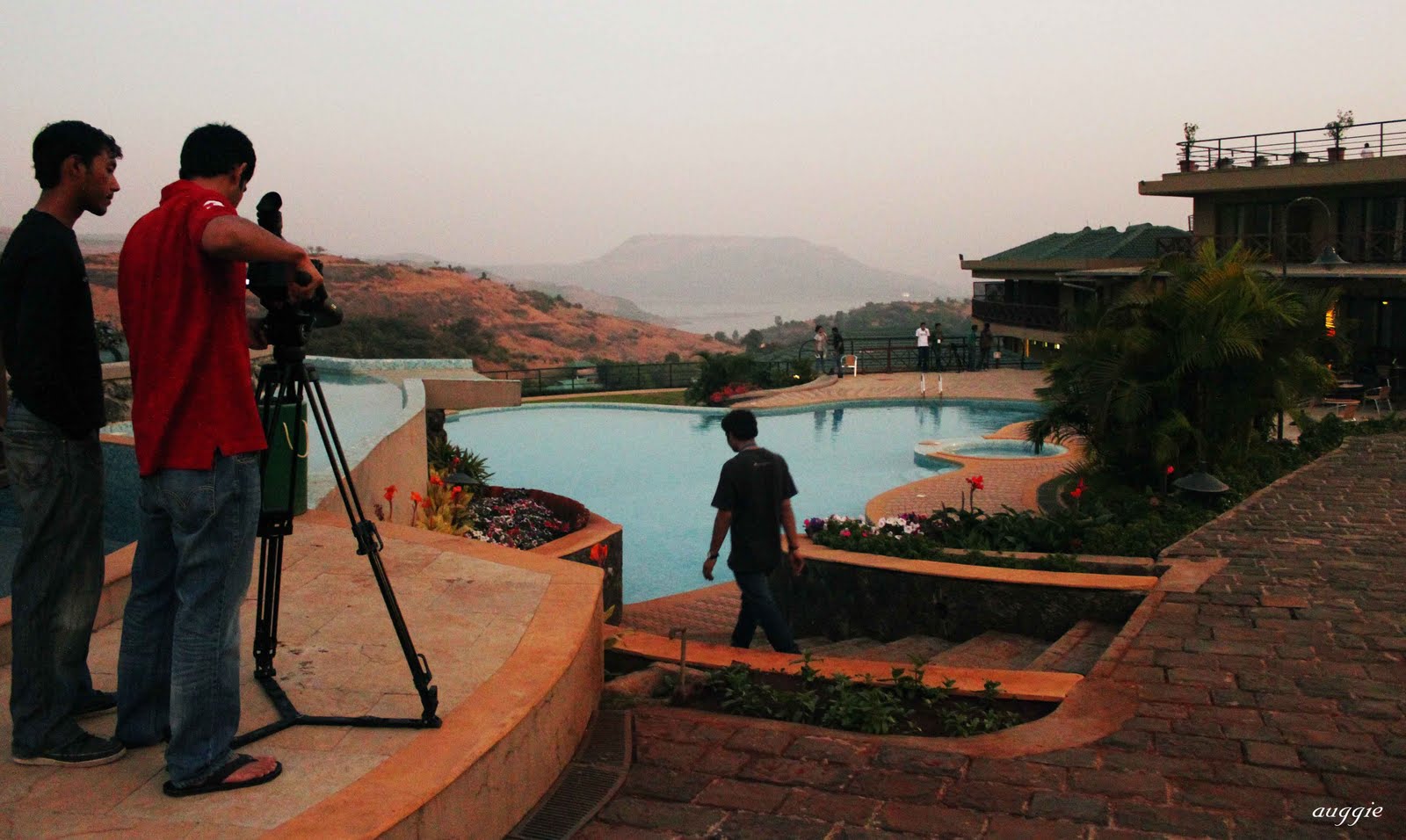
A 3D competition put together by Panasonic where 7 film schools across India participated in a short duration movie/documentary making contest in 3D, a workshop at Upper Deck @ Lonavala where Barry Braverman (DOP / 3D expert) took everyone through the basics of 3D in quite a depth at the same time introducing Panasonic's AG-3DA1 camera.

Upper Deck - Lonavala

You can check this page for the specs and some basics of the camera and 3D:-
http://pro-av.panasonic.net/en/3d/ag-3da1/index.html


Film schools that participated in this competition were
LV Prasad - Chennai

Chennai Film Industrial School (CFIS) - Chennai

Asian Academy of Film and Television (AAFT) - Delhi

NDTVmi - Delhi

Film and Television Institute of India (FTII) - Pune

Symbiosis Institute of Media and Communication (SIMC) - Pune

Satyajit Ray Film and Television Institute - Kolkata


The entire gang.


In the workshop, Barry not only covered 3D but also looked into storytelling and how one could use 3D to enhance the story by using it. The limitations and the so-called rules or basic principals one could say were also shared during the course of this workshop.  


A bunch of professionals from the industry including me, were asked to act as mentors or creative producers, our responsibility was to make sure that while creativity was given a free hand there were no basics that were overlooked and a check on budgets of course. Nikhil Gonsalves was the chief producer and all teams had to report to him.

The mentors along with Barry and Nikhil.

The fields from which each mentor come are as follows:-
Satyanshu Singh - Scriptwriter
Arjun Venkatesh - Cinematographer
Rohan Talwalkar - Assistant Director
Augustine Fernandes (Auggie) - Director. 
Chirag Patel - Cinematographer / Photographer
Tunali Mukherjee - Photographer / Writer
Kumar Devanshu - Scriptwriter


Over the 3 days, the teams were given a chance to use 3D cameras, so that technical questions mainly because of the medium could be sorted, also limits of the camera and medium were figured. Each team had to work on stories which they had to pitch and only after all the producers were happy were the teams given a green signal for that story to be their 3D film which they would work on following the workshop. While pitching each team had to have back up ideas in case the one pitched failed to make the cut, also they had to come up with a Title, log line (story in one line or something that is memorable from the film), and a poster for the pitch. (This is something that a few directors go through when they try to sell their script to producers or financiers)


Post the workshop teams returned to their colleges and work on their storyboards, location recce, casting, costumes and mainly budgeting, dates were fixed post-budget approvals and this followed by prep and shoot. All teams were given sufficient time and were called in batches for their respective edits at Qlabs in Mumbai, the process involved a basic 2D edit a 3D conform, DI while dubs and sound mix on 5.1 Dolby. The finished films were burnt onto blu ray and were ready for judging.

The judging was done by none other than
Rajkumar Hirani 
Nikhil Advani  and
Karan Johar

So while the winning team got to fly to LA to visit the Panasonic Studios the rest of us took back the fact that we were among the rare few who got to learn and work in a medium that is still in the developing stage. We also got to take back memories along with a whole bunch of new friends from across the country.

You can watch the episodes that were covered by NDTV and which were aired in the links below
(Don't know how long these links will last though.)

Episode 1

Episode 2

Episode 3

Final Episode


For more interesting articles click on Auggielicious Index to see the entire list.
Like / Follow on the Facebook page Auggielicious for information, latest news, job posts etc..


Tuesday, May 3, 2011

Post Production Tips Part – 2

"You can't handle the truth!"– A Few Good Men

Post Production Tips Part – 2


*Attitude & Relationship, 
*Technical knowledge, 
*Planning & Buffer, 
*Food, 
*Market knowledge & Contacts, 
*Systematic, 
* Back-ups, 
*Accounts, 
*Bills.


Here are some more that would help you to be a good post-production manager,

1. Understanding the Director


Understanding the director you are working for is important to smoothen the process, each director has a unique style of directing and therefore functioning. Most directors get categorised into drama, comedy, style, etc. So while some give a lot of importance to post, there are some who concentrate mainly on pre. In the case of the earlier, you can be assured that the director is going to be involved at every step in the post, there are films that have a lot of graphics or special effects these always require a lot of the director's involvement as approval at every stage is generally required. Therefore knowing if your director would be present throughout or would come at the last stage helps in planning the post. For example, some directors like the editor to go through the rushes and come up with their version of the cut that they feel right, the director then joints the edit after that. But there are others who would like to sit and make the first cut themselves. There is also some who like starting the day late and working into the night while some like starting early and packing up early. Once you have understood the style of the director it is up to you to make sure that you function in the style that is best suited to that director.

2. Communication


Another key ingredient in a good post person or any other department of film making is communication, there are and will always be days when there are delays, or some problem or the other, it is very important to communicate in these cases. Informing the director or editor or the dubbing artist that there is a delay which allows them to plan their life so they don’t have to come to the studio and have wasted time waiting where they could have done some other work. Being in touch with people working for you helps especially when on multiple projects or multiple bookings at the same time, this helps you be on top of what is happening in all places and making sure that time is not wasted. Like if working on online and music at the same time speaking to the editor to know how much work has happened or the music director if you need to be calling for a singer or musician. There will always be a time when multitasking would be called for and this quality comes in handy the most. Letting the director or a producer know about a goof-up helps in controlling a situation well in advance and that avoids things to blow to later.  Also communicating the right information at the right time can save a lot of embarrassment for many, not always does one know or have all details and therefore a warning about a delay or a goof-up can be rectified faster without anyone having to lose their cool.

3. Getting Favors


Being polite and getting favors done is an art by itself, getting a few extra hours or a last-minute booking at a busy studio takes a bit of doing, remember that while you should always try and get your work done, there are times for you to also return favors to people, like helping the studio to give away your room despite it being your booking in order to help another client will be remembered by the studio and they will definitely return the favor when you need it. Don’t forget to give a subtle hint that you are going out of the way to help the studio (even though you may not be) so that your favor is remembered. Remember you will only win favors when you help others.

4. Cracking Deals


As part of this job, you will also have to deal with money, which you may not be paying but the production house you work for does, understanding the need and fixing deals so that all parties are happy will be required. Most production house's work with same post studios so usually rates are already fixed, in the case of the first-timer or in case of a very low budget is when such deals are cracked, you could bargain for better rates as the frequency with the associated increases and at the same time keeping market values in mind. One way of cracking a deal is to tell the studio the time that you estimate that you would use and the amount that you have in total to spend, or you ask for a discount in the rate per hour and you try to fit the no of hours as per your budget. One very important thing to remember is that all deals should happen before the commencement of the project and not after, it is unethical to make someone work and then ask for a discount on the rate after the job is done, even if one has worked with this party for a long time, give people the right to decide if they want to work for lesser or not. Also once the deal is fixed and both parties are happy, then should be no re-negotiating after that.


5. Track Booking and Cost


There are some producers who will give the post guy a free hand while some will check-in at every stage, irrespective of that it is the responsibility of the post person to know at any given time how many hours were used or how much money has been spent on a particular project. If it is one project it is usually easy to remember but most of the times there are multiple projects involved, the trick to keeping a track of all of it is to use the schedule sheet, at the beginning of any project a schedule is drawn up and bookings are taken according to this, carry this around with you at all times and enter the hours used at the end of every day or session, use the remarks column to make note of things that may be required to remember at a later stage, like if a singer or an extra voice was called during the music session and how much did the person charge. So while working on multiple projects remember that while signing the challan/worksheet, to make a note of it on your schedule as well, carry printouts as its easier to write this down immediately. However, entering it on your computer or carrying an updated sheet on your mail always helps you recall after many days.

6.  Say SORRY when needed


The biggest problem that I have seen across people especially the freshers is the lack of ability to say sorry when they goof up. I don’t understand why saying sorry even after the mistake has been pointed out and sometimes even self realised is so difficult. We work in an industry filled with egos and it would be the best to own up for one's mistakes, it cuts down the other person's anger and helps keep the situation under control most of the time. While I will never say sorry if something I have done is right, but for that, I have to not only 100% sure that I was correct by what I thought but by universal standards as well.  So before standings, one's ground better be sure of what is acceptable or not. There are times when saying sorry diffuses the situation at the moment and justifications can be given at a later stage when all is calm.
Keep these pointers in mind and you will suddenly notice how smooth projects go, you will begin to have fun and there will be an increase in your demand and in turn also have made a lot of friends and money for your work.


Auggieism:- What would you say if Auggie was carrying wood
Ans:- Loggie..


For more interesting articles click on Auggielicious Index to see the entire list.
Like / Follow on the Facebook page Auggielicious for information, latest news, job posts etc..


Friday, July 2, 2010

Wanna be a..... Director

“This isn’t personal, Kay. This is business”, Michael Corleone - The Godfather , (1972)

Wanna be a..... Director


Want to be part of the glamour but don’t know what to do.? Can’t make up your mind if you want to be a Director or a Cinematographer or a Music Director... read on as I give you an insight which no film school will ever tell you. This blog is on if you Wanna be Director.  Most of this is based on my experience in India and figures would vary as time passes.


POST: Director


JOB PROFILE:


A Director is the leader of the project mainly in terms of vision and direction. He is responsible for decision making and it’s his style and effort that shows in the end. He is responsible for the acting, style of shoot, the technical direction, etc. The director is the one who takes it from the story to the screen, he also participates in choosing the team, at least that of the key crew,(mainly the head of the departments) also the cast gets finalised only after the director’s approval. He has meetings with the head of almost all departments before the film goes into production and also has rehearsals with the actors sometimes (if time is available) He uses scripts, storyboards, references when meeting with these departments to show and explain to the team what he feels the film should look and feel like.

Lots of time the director becomes or feels like an answering machine. A yes or no, eg, when costumes come back after the briefing with references then it’s the director who says yes or no to colours, material, and so on and so forth. The same goes for all other departments. The director has also to work with the post team, influencing the grade of the film, with the editor to check for cuts and the flow of the story, etc.

EXPERIENCE REQUIRED:


Anyone with a vision can become a director, there are people who become directors based on experience, some on qualification, and some just by the influence they bring. 

Experience can be gained by working closely with good and bad directors, working with different people show you different styles of working, also different production houses also function differently, so it helps in choosing a way that suits your style and also one that is right for production. 

For people who are new to the industry and want to be part of it, there are various courses that one could take up to learn the art. These days one can graduate with a BMM degree – Bachelors in Mass Media, this is a 3-year course and teaches you the basics of all media-related industries including journalism, market research. Although this course does not prepare you for direction, it gives you an overall about media. There are also government-run institutes like the F.T.I.I. - http://www.ftiindia.com/ and private ones that offer specialized and general courses for those who have already done their graduation. One could also choose from courses abroad like 


You could also check these site’s out which has a list of schools from across the world


The way to choose the best schools to learn is to check the course duration, the syllabus, topics covered, the teachers, their real-life experience with film making, what are the practical’s the course offers, the library, and of course the fees, if one is leaving their country then place to stay and those expenses of upkeep also have to be kept in mind while choosing what’s best for you.  
If you trying to get through this industry then you better hope that you come from a family with a lot of influence in the industry or are just plain rich to finance your ventures.

TIMINGS:


Depending on experience and how quickly he can make decisions the time spent by directors at work may vary. During the shooting phase, the director almost always is there from the start to the end. (except during pre-light) the time and effort of Pre and post vary. 

Documentary directors = since a lot of research goes into documentary’s lots of time the research time is the same as shoot as usually the documentaries are made up of findings and interviews which are usually shot at the first attempt. In other words, the amount of time spent would be equal to the passion for the subject.  

Daily soap / Serials = minimum time few hours a day ranging from 2-6 hours during the planning days, and during shoot depending on the availability of actors and locations the time on the shoot, days are the normal one and half shift, to even 2 shifts sometimes.  

News (non-news episodes) / MTV kind of serials (where the director and producer are the same people) = usually full days ranging from 8 – 12 hours or even more, most f the times these are hired employees so office timings would apply,  the shoot timings are generally ranging from one shift to 2 shifts.

Promos and Advertising = depending on the team provided and the quickness at which the director takes decisions’ time spent could be ranging from 8 – 12 hours to sometimes even 20 hours if things don’t fall in place in pre (especially just before PPM’s and shoot days). During shoot which usually lasts 2- 4 days generally, it’s a similar one and half to 2 shifts.

Features = depending on the time spent in Pre-production the director would give that much of time per day. Since pre in feature films usually take months the director usually doesn’t need to kill himself at the office every day, time spent could be ranging from 2-4 hours on an average to 6-8 hours on some days. Most of these are time spent in meetings. The shoot lasts sometimes for months, and mostly its the standard one and half shift per day.

PROFITABILITY:


Documentary Directors – depending on if it is commissioned or if it is being done out of passion one could make nothing to a few thousand. Documentaries are rarely very profitable monetarily at least. The commissioned ones, at least some of them do make a decent amount.

Daily soap / Serials – directors here get paid per episode usually, though some do get monthly salaries. Money ranges from 10,000 Rs per episode to 25,000 Rs per episode could go up to 80k approximately which is mostly for weeklies. So on an average, it could range between 40k – 80K for beginners to 80K – 4lacks per month as experience increases.

News / MTV kind of serials – here the amount of money the director makes is in the hands of the director himself, especially if he is a freelancer and not on the payroll. What generally happens is a budget is given to the director and the amount he saves is up to the way he plays and makes deals with the crew they are hiring.

Promos and Advertising – the money made here depends on the deal made with the producer, the two ways are the director chargers a fee for the project (usually when the director is a freelancer or a beginner) or a percentage of the profit. In the first case a director could make 1 to 2 lacks per day of the shoot or a higher deal as agreed between him and the producers. Sometimes the deal also works in percentages of the total budget, 2% - 15% of the figure usually.  As far as percentages go a beginner could make anywhere between 10% - 15% and this could go up to 60% - 80% as experience and demand go up.  

Features – experience plays a huge role in the figure that a director makes. A first time director could make 5- 9 lacks for the film and as experience and hits come his way the figures could go up and there is no end figure that one could say he could make.

THE TEAM:


The director is the captain of the ship and all are the crew that gets hired to work for him. The immediate people who report to him are the direction team which is made up of DA’s and AD’s. The DA – Director’s Assistant sometimes also doubles up as an assistant director, and the number of assistants hired depends on the budget so ranging from 2 – even 7 and 8. The rest of the crew are Production and their team, line prouder and his local team, DOP and his team, camera, lights, grips, gaffer, special equipment like a crane or a Milo, costume’s, hair and make, stunts team, VFX team, transport, caterers, food stylists, and the list goes on and on. The hiring of these is obviously based on the requirement.

So now that you know what it is about being a director you can decide if you want to be one or specialize in some other department. Remember a director like any sportsperson is only as good as his last film, so if you have the talent for it I would say go for it and all the best.


For those who have no time to go to a film school or have already started working check out No Film School for more tips and learning


Auggieism:- What do you call a loyal Auggie... . 
Ans:- Doggie..


For more interesting articles click on Auggielicious Index to see the entire list.
Like / Follow on the Facebook page Auggielicious for information, latest news, job posts etc..