Showing posts with label 3D. Show all posts

Friday, September 7, 2012

Careers in filmmaking - Post Production

"We wants it, we needs it. Must have the precious. They stole it from us. Sneaky little hobbitses. Wicked, tricksy, false!" - Gollum, Lord of the Rings: The Two Towers. (2002)


Career Choice – Post Production


Pre-Production not your cup of tea, so here are some of the things you could do in post-production.

POST - PRODUCTION


Post Production Supervisor Key link in coordinating the entire process from after shoot till the project ends. Does not need to know how to operate the various systems, but some amount of technical knowledge does help. It could be freelance or inhouse with either a production house or even a Posthouse.

Offline Editor – the person who cuts the rushes to a viewable sequence in accordance with the director’s vision. It could be freelance or associated with a post-production studio.

Assistant Offline Editor – Assists the editor, main job role would be digitising the rushes, sorting it, sound syncing, making subclips  etc. Usually a trainee who wants to become an editor.

Online Editor – works on high resolution systems, not so much for cutting the film but used for compositing, tittling, cleanups etc. mostly is associated with a studio very rarely do u find freelance online editors. 

Colourist – sets the colour tone to the film. Is always associated with a Post Production House.

Machine Room Technician –  works in the machine room of a studio, is responsible for connections from offline, online rooms to recorders, players, hard disks etc.

Booking Manager – the person who manages the booking to all the rooms present at the post house, job done by more than one person at bigger studios.

Studio Manager – handles all the client and editor related complaints or suggestions and making sure that work flows smoothly. Mainly like a P.R. role.

Visual effects supervisor  (Vfx) – Usually the head of the graphics department, or the person who is heading the project, could also be the expert on that particular job. Knows how to work the software mostly.

3D Graphic’s – person or a team of people who work on 3D graphic software's.

2D Grpahic’s – person or a team that works on 2D graphics, sometimes the person knows both 2D and 3D. 

Music Director – the person who controls the direction of the music on all levels, not necessarily the composer of the piece.

Composer – the person who could use both instruments and software's to compose a music track, background score.  

Arranger – has to make sure that every aspect of the music piece is well harmonized. Could work on an original or an existing piece of music. Sometimes the music director or the composer also plays this role.

Sound Engineer – records voices at dubs, lays tracks from the music director mixes it all down to a proper balance that is required.

Foley Artist - Creates sound effects that cant be captured during film making, sounds like footsteps, clothes rustling, door closing etc. its any sound that could be part of the scene.

Singer – Sings either the main voice or in a chorus.

Voice Over Artist (VO) – the person who dubs the voice either in place of the actor or the voice for the product window like in advertising. Short forms are MVO and FVO for males and females respectively.

Language Co-ordinator for VO – a person who co-ordinates and arranges for VO artists in different languages according to the requirement at the recording studios. Sometimes also arranges for a language supervisor.

Language Supervisor – Someone who supervises the language pronunciation, and also makes necessary to the translations if necessary. Sometimes the language scriptwriter also doubles up as the supervisor.


Of course, most of these titles have assistants to them. There are more jobs to post-production, like a Promo Producer in a Television network or Publicist in a feature film. Still can't decide what to do then maybe its journalism, advertising agency, channel, etc is where you need to be.


Auggieism:- What do you say when Auggie is overeating?
Ans:- Hoggie..


For more interesting articles click on Auggielicious Index to see the entire list.
Like / Follow on the Facebook page Auggielicious for information, latest news, job posts etc..


Friday, August 24, 2012

My Voice Over - Mswipe

Check out my voice recently done for Mswipe


For more interesting articles click on Auggielicious Index to see the entire list.
Like / Follow on the Facebook page Auggielicious for information, latest news, job posts etc..


Wednesday, January 18, 2012

My AD Film on air - Lacto Calamine "Range Offer"

My 2nd AD Film on air
Lacto Calamine "Range Offer"

A new version done, similar to the earlier release of Lacto Calamine "Summer Offer" (Also directed by me), this one shows the entire range of that is available, i.e 120ml, 60ml, 30ml of the Classic and the Aloe Moisturiser while a offer of a free facewash of the corresponding 70ml, 50ml, 30ml of the respective bands. 

Check it out -


The film was approved in the first presentation, thanks to all who worked on it.

CREDITS - 
Lacto Calamine "Range Offer"
20-sec Showreel Version

Director: Auggie
Production House: Pumpkin Media
Producer: Prashant Bhardwaj
Post Production: Vishwas
CG: Mandar and Team
Music: Prashant Vadhyar
Sound Studio: Sound Ideaz
Voice Over: Sonia
Post Production: Pixion
Online: Auggie N. (Pixion)

Agency: Orchard
Copywriter: Pooja Ambulkar
Creative Director: Ajay Menon
Brand Director: Kaushik Sarkar
Sr Brand Associate: Rekha Hindlker

There is another AD film completed by me which is scheduled for release in Feb 12'


For more interesting articles click on Auggielicious Index to see the entire list.
Like / Follow on the Facebook page Auggielicious for information, latest news, job posts etc..


Tuesday, June 7, 2011

The Core Skills of VFX

Came across this check it out for those planning to enter VFX or already in VFX:-

The core skills of VFX

Skillset is letting you download a Core Skills of VFX Handbook that has one simple but ambitious aim: to improve the new entrant skills available.


The handbook is relevant to both students and tutors; it is designed to assist universities and colleges to raise the standard of VFX courses available

Download the Core Skills VFX Handbook: for free


http://www.skillset.org/animation/qualifications/article_8377_1.asp


For more interesting articles click on Auggielicious Index to see the entire list.
Like / Follow on the Facebook page Auggielicious for information, latest news, job posts etc..


Tuesday, May 31, 2011

Panasonic Dimensions 3D film competition

Panasonic Dimensions 3D film competition:-


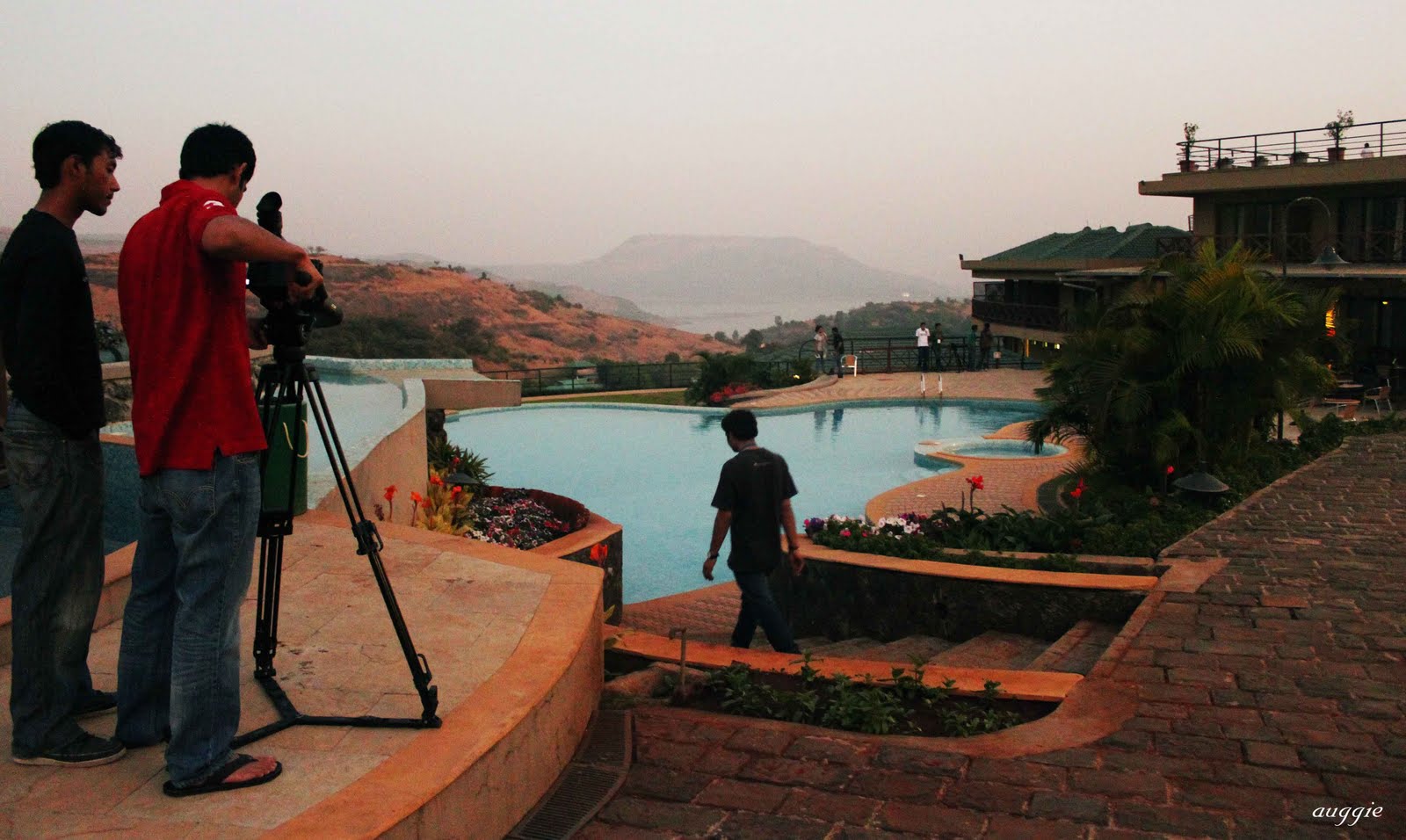
A 3D competition put together by Panasonic where 7 film schools across India participated in a short duration movie/documentary making contest in 3D, a workshop at Upper Deck @ Lonavala where Barry Braverman (DOP / 3D expert) took everyone through the basics of 3D in quite a depth at the same time introducing Panasonic's AG-3DA1 camera.

Upper Deck - Lonavala

You can check this page for the specs and some basics of the camera and 3D:-
http://pro-av.panasonic.net/en/3d/ag-3da1/index.html


Film schools that participated in this competition were
LV Prasad - Chennai

Chennai Film Industrial School (CFIS) - Chennai

Asian Academy of Film and Television (AAFT) - Delhi

NDTVmi - Delhi

Film and Television Institute of India (FTII) - Pune

Symbiosis Institute of Media and Communication (SIMC) - Pune

Satyajit Ray Film and Television Institute - Kolkata


The entire gang.


In the workshop, Barry not only covered 3D but also looked into storytelling and how one could use 3D to enhance the story by using it. The limitations and the so-called rules or basic principals one could say were also shared during the course of this workshop.  


A bunch of professionals from the industry including me, were asked to act as mentors or creative producers, our responsibility was to make sure that while creativity was given a free hand there were no basics that were overlooked and a check on budgets of course. Nikhil Gonsalves was the chief producer and all teams had to report to him.

The mentors along with Barry and Nikhil.

The fields from which each mentor come are as follows:-
Satyanshu Singh - Scriptwriter
Arjun Venkatesh - Cinematographer
Rohan Talwalkar - Assistant Director
Augustine Fernandes (Auggie) - Director. 
Chirag Patel - Cinematographer / Photographer
Tunali Mukherjee - Photographer / Writer
Kumar Devanshu - Scriptwriter


Over the 3 days, the teams were given a chance to use 3D cameras, so that technical questions mainly because of the medium could be sorted, also limits of the camera and medium were figured. Each team had to work on stories which they had to pitch and only after all the producers were happy were the teams given a green signal for that story to be their 3D film which they would work on following the workshop. While pitching each team had to have back up ideas in case the one pitched failed to make the cut, also they had to come up with a Title, log line (story in one line or something that is memorable from the film), and a poster for the pitch. (This is something that a few directors go through when they try to sell their script to producers or financiers)


Post the workshop teams returned to their colleges and work on their storyboards, location recce, casting, costumes and mainly budgeting, dates were fixed post-budget approvals and this followed by prep and shoot. All teams were given sufficient time and were called in batches for their respective edits at Qlabs in Mumbai, the process involved a basic 2D edit a 3D conform, DI while dubs and sound mix on 5.1 Dolby. The finished films were burnt onto blu ray and were ready for judging.

The judging was done by none other than
Rajkumar Hirani 
Nikhil Advani  and
Karan Johar

So while the winning team got to fly to LA to visit the Panasonic Studios the rest of us took back the fact that we were among the rare few who got to learn and work in a medium that is still in the developing stage. We also got to take back memories along with a whole bunch of new friends from across the country.

You can watch the episodes that were covered by NDTV and which were aired in the links below
(Don't know how long these links will last though.)

Episode 1

Episode 2

Episode 3

Final Episode


For more interesting articles click on Auggielicious Index to see the entire list.
Like / Follow on the Facebook page Auggielicious for information, latest news, job posts etc..


Thursday, May 26, 2011

My Advertising Directorial Debut

My advertising directorial debut,


Check out the first of my work to go on air,
This one is for Lacto Calamine "Sumer Offer" 15 sec where you get a face-wash free along with a bottle of Lacto Calamine. This is the director's version has minor differences to the one on-air like the music ending.

CREDITS:-
Agency: Orchard
Copywriter: Pooja Ambulkar
Creative Director: Ajay Menon
Executive Creative Director: Hemant
Senior Brand Associate: Bhagyarekha Hindlekar
Account Director: Kaushik Sarkar
Films Executive: Shraddha Singhvi
Director: Auggie
Producer: Prashant Bhardwaj
Production House: Pumpkin Pictures
CG: Mandar and Team
Music: Prashant
Sound Studio: Purple Haze
Sound Engineer: Rahul
Voice Over: Sonia
Post Production: Prime Focus 


For more interesting articles click on Auggielicious Index to see the entire list.
Like / Follow on the Facebook page Auggielicious for information, latest news, job posts etc..


Friday, December 11, 2009

STORYBOARD

“Toto, I've (got) a feeling we're not in Kansas anymore." – The Wizard of Oz.

STORYBOARD

Love drawing cartoons, then storyboarding is for you. Storyboards work for all - features, Tv serials, AD films, and even for animation. It helps some more than the other.


What is a Storyboard?

A Storyboard is a way of pre-visualizing the director's thoughts or ideas (mainly scripts) into illustrations or images so that the director and the team can see what he plans to shoot or do.

What does a Storyboard look like?

A Storyboard is a series of still images or illustrations put in story order to explain to everyone what the director's vision is. They could just be images put in order which explains everything, or usually, there is a description alongside which describes the camera size (like wide, mid, etc) and the dialogues that go along with the frame. The dialogues could also be broken up based on the edit pattern that the director has in mind. For presentation the general norms are to have the image on the left and the description on the right, these could be 4 per page or if the other pattern of 2 a page is used then the description is put below the image. Sometimes this pattern is used to put as many images in one sheet as possible so that the entire story or scene is on one sheet so that the overall idea could be seen faster.
Storyboards can be done differently from 2D to 3D they can be done in black n white, or in colour, even still’s are sometimes clicked to make one. Storyboards can be done in detail, with as much information in it as possible, which means that camera lensing, set area, props, etc all included. This detailing helps all departments to plan what needs to be done by just looking at each frame. Sometimes there is not enough time or money to get the entire film boarded so key scenes or just keyframes are boarded. Further lack of time also calls for just doodles to be drawn by the side of the script to be a quick fix.

Where and to whom is a Storyboard the most useful?

It gives the directors, producers, cinematographers, commercial advertising clients, etc a tool to visualize the scenes and find potential problems before they occur. It helps in planning story flow for the edit and move shots around if need be. The AD’s can go ahead and plan the shoot accordingly to the board, which would help in saving time so that set up of shots don’t have to be repeated.
In commercials, the storyboard holds quite an important place in the process. Besides the shooting crew which follows the board quite closely, the first use of the storyboard starts at the pre-stage where the board is shared between agencies client and production house, here at this stage mostly each frame gets studied and based on this board changes are suggested based on brand guidelines and the image of the brand. Like the use of certain colours which match the brand, or the non-use of certain objects because of legal issues. All of this helps so that all corrections could be made before going ahead with the shoot which helps in saving of reshoots or any surprises left on the day of the shoot. The meeting which happens with the agency, production house and client is called a PPM - Pre Production Meeting, this is usually a few days before the shoot which gives enough time for the changes to happen, sometimes there are more than one PPM as either there too many changes or too many levels of clients to go through. (like when the main brand team belongs to another country)
The process of putting stills or a series of images along with a rough audio or a track together s called Animatics. This tool is increasingly used by advertisers and advertising agencies to research the effectiveness of their proposed storyboard before committing to a 'full up' television advertisement.

History of Storyboards?

It is said that the storyboarding process, in the form it is known today, was developed at the Walt Disney Studio during the early 1930s, the first storyboards at Disney evolved from comic-book-like "story sketches" to illustrate concepts for animated cartoon short subjects. Websitesand other interactive media projects are the most recent known use of Storyboarding during the design phase.

When and how does a Storyboard come about?

Well first obviously there needs to be a script or a screenplay, in advertising, this is usually coming from the creative team, in films is the script or screenplay writer from where this would come. Then the director has to break it into the no of shots or cuts that he wants to put into the film. Referencing through images is one of the key factors during the making of the board. Key things to know before starting are live location vs set, look of key props, the way the camera moves in certain cases and sometimes look of the costumes are also needed. If it’s a live location then a recce of the place before or pictures of the place in detail, or if it’s a set then a proper layout design of the place helps, here a meeting with the production designer (if there is one) or the art director, where a brief is given (along with the references) and then they draw up a plan based on which a storyboard is done. This holds true for most cases but sometimes the director may want to make a board and then brief the art director what all details he is looking for in the set. Either which ways the director has to have references of the kind of look of furniture or style of house etc to show the storyboard artist (Most of these references are chosen keeping the target audience in mind that is intended)
The key to a good board is how much it helps each department, so the more detail in the board the better, the no of cut one wants to have decided the no of frames to be drawn, a fast-paced film will have more number of cut’s, therefore, will have more frames. Montage, Action are usually the times when you have a lot of frames for a short period. For animation usually, almost all keyframes have to drawn as the team can then follow the direction correctly.

Different ways of making a Storyboard?

Besides the normal 2D drawing there is also 3D way of making storyboards. The advantage of 3D storyboards (also called 'technical previsualization') is they show exactly what the film camera will see using the lenses the film camera will use. The disadvantage of 3D is the amount of time it takes to build and construct the shots. 3D storyboards can be constructed using 3D animation programs or digital puppets within 3D programs. Some programs have a collection of low-resolution 3D figures which can aid in the process. Some 3D applications allow cinematographers to create "technical" storyboards which are optically-correct shots and frames.
Making of storyboards are also helped with a number of tools, StoryBoard Quick, StoryBoard Artist, Storyboard Pro, FrameForge3D, etc all these software basically helps a common man to make boards and not have to wait for a professional artist to come to work for you. They offer usually a range of sets and shapes of houses, cars, etc, some of these lets you import your own pictures so you can use the pictures from your location to see what you film would look like. Most of these come with customizable characters of male, female, age, height, colour, etc, etc.. you could also add audio to some of these and watch them back in proper timing.
If there is still doubt and clarity is required then shooting the script on a home camera or cellphone and then editing it down also helps in clearing the doubts, this could be done with the help of the actors as a rehearsal or with assistants, in any space. This edit helps all to see the problems that one may encounter in the final shooting, like the timing of actors, the number of cuts required, more or fewer shots to be taken, etc.
Lastly for live locations or usually when the set is ready, (on the tech recce) what also could be done is a what is called a walk thru, wherein the cinematographer or the director uses a still camera (ideally with different lenses – like the ones used in the board) and does a run through all the shots in the same blocking that is intended for the final shoot. If one has the budget then even the film camera with the intended lenses can be used and the rehearsal could be recorded on the video assist. (not rolling the film) This process is usually called blocking and is the first time a Storyboard can be seen in the semi-final state before the shoot. These stills if it is shot properly could be used as the final board before the shoot.
In Television serials and Feature films where time and money do not permit the making of detailed storyboard, just stating camera cuts at the side of the script Like dialogues are marked at the side from which to which is Wide and what dialogues go as a close-up, etc. So whatever you do, a detailed board or a doodle, having a shot breakup at least in your head is important.


Auggieism:- What would you say if Auggie got wet in the rains...
Ans:- Soggie..


For more interesting articles click on Auggielicious Index to see the entire list.
Like / Follow on the Facebook page Auggielicious for information, latest news, job posts etc..